Spring 2026 Edition · Free Guide
The Inner Brisbane Airbnb Earnings Guide
Across the 12 inner Brisbane suburbs we track, the average Airbnb earned $4,130 a month in owner revenue over the 12 months to August 2026. Market-wide, 4,310 active listings averaged 81% occupancy on a $215 nightly rate (PriceLabs Hyper Local Pulse). This guide breaks the market down suburb by suburb and month by month.
What properties within 5km of the GPO are really earning right now, how the winter trough snapped back in July, what the paused council crackdown means for you, and how the top performers stay ahead all year.
Get Your Free Income Estimate Download the Guide (PDF)01 · The Market Right Now
Inner Brisbane, spring 2026: the honest numbers
This edition uses PriceLabs Hyper Local Pulse market data for the 12 months to August 2026. The wider Brisbane dataset covers 4,310 active listings, while the published twelve-suburb revenue comparison covers 2,950 listings. The averages below describe the market, not any one property.
What the headline number really means
$4,130 a month is the inner-Brisbane average owner revenue across the twelve-suburb comparison, before management fees and owner costs. It covers a range of listing types, sizes and availability patterns. It is not evidence that a particular property is underperforming or will exceed the average; that requires a property-specific comparison.
To put it in perspective: Cameron Tupper's professional market observations as at October 2026 put a comparable inner Brisbane two bedroom apartment at roughly $3,000 to $3,400 a month on a standard 12 month lease. The rent range and the long-term fee schedule below are his observations, not PriceLabs Hyper Local Pulse figures or third-party statistics. At the market average, $4,130 a month in short stay owner revenue works out to about $3,312 after the 18% + GST management fee, before owner costs.
Prefer like-for-like? The average two bedroom short stay listing brought in $3,974 a month in owner revenue over the same period, about $3,187 after the 18% + GST management fee. The $3,200 midpoint rent nets about $2,812 after the typical 8.8% long-term management fee, $10 monthly statement fees, and letting plus advertising averaged over annual turnover: about 13% ahead for the managed short stay, before owner costs. On top of the income gap: the flexibility of owner stays whenever you want them, and a property kept in consistently pristine condition, cleaned and inspected after every stay.
Winter was the floor. The rebound has already started
June is the softest month of the Brisbane short stay year, and 2026 proved it again: the market bottomed at about $3,500 per listing in owner revenue. Owners who judged their property on a June statement were looking at the market at its lowest ebb. July snapped back to about $4,700 in owner revenue as the school holidays bit, December 2025 delivered about $5,000 per listing. Spring events provide separate dates to review, not a guarantee of a stronger season for every listing.
Source: PriceLabs Hyper Local Pulse market data for Brisbane, 12 months to August 2026. The twelve-suburb revenue comparison covers 2,950 listings; wider-market occupancy, daily rate and guest-stay metrics use 4,310 listings. Owner revenue is after booking platform fees, before management fees and owner costs. Individual results vary with the property, availability, pricing and costs.
Methodology, scope and reuse termsOpen the source period, calculation limits and attribution requirements.
Two listing scopes. The wider Brisbane dataset contains 4,310 active listings and supports the 81% occupancy, $215 average daily rate and 3-night average stay. The twelve-suburb comparison contains 2,950 active listings and supports the suburb revenue figures and the $4,130 listing-weighted inner-Brisbane average. December 2025, June 2026 and July 2026 are inner-Brisbane market-wide seasonal observations, not suburb-specific monthly results.
Owner revenue and calculation. Owner revenue after booking platform fees, before management fees and owner costs. It is not net profit or a property-level forecast. The published $4,130 average comes from the original PriceLabs Hyper Local Pulse analysis; it is not recalculated from the rounded display rows in the CSV. Suburb revenue and nightly-rate figures are rounded for publication.
Limits and comparisons. Suburb averages combine different property types, sizes, presentation and availability. They do not predict one address. The long-term comparison uses the separately stated $3,000 to $3,400 monthly range for a comparable two-bedroom apartment. That range and the long-term fee schedule are Cameron Tupper's professional market observations as at October 2026, not PriceLabs Hyper Local Pulse figures or third-party statistics. Short-stay figures are before management fees and owner costs unless a calculation says otherwise. Obtain a current rental appraisal and property-specific estimate before making a decision.
Dataset use and attribution. You may quote and reproduce the published aggregated figures, including the twelve rows in the downloadable CSV, with clear attribution to Brisbane Airbnb Management and a link to this page. This limited permission covers only this website's published presentation of the figures. It does not grant rights to underlying PriceLabs data, other website content or any listing-level information.
Download the current twelve-suburb CSV. The file contains the period start and end, dataset version, twelve-suburb comparison scope, methodology URL, rounded monthly owner revenue, average nightly rate, active-listing count, owner-revenue basis and source fields for each published suburb. It contains no listing-level private fields.
Download the twelve-suburb CSV
Dataset version: 2026-10-26. Source publication: PriceLabs Hyper Local Pulse Brisbane market data, September 2026. The twelve rows sum to 2,950 active listings.
02 · Suburb by Suburb
Where the demand actually comes from
Inner Brisbane is not one market. It is a dozen micro markets, each with its own guest mix, demand drivers and price behaviour. Here is how we read the twelve we manage in.
| Suburb | Who books it, and why |
|---|---|
| Brisbane City | Business travellers, conference guests and city-break visitors. Assess office, event and holiday booking patterns separately; neither weekday rates nor river-view premiums are guaranteed. |
| Fortitude Valley | Live-music, dining and city-access stays. Review confirmed events and ordinary midweek nights separately rather than assume a fixed weekend pattern. |
| Newstead | Business, couple and local-event visitors using Gasworks and the riverwalk. Current bookings and comparable apartments should guide the estimate. |
| New Farm | Park, Powerhouse, dining and local-visit stays. Property character and layout shape guest fit; longer stays and higher rates are not assumed. |
| Bowen Hills | Brisbane Showgrounds event and hospital-related visitors. Assess each confirmed event and practical transport access without promising a fixed spike. |
| Spring Hill | Medical, business and family-support visitors near hospitals and the CBD. Property access and current bookings matter more than a claim of uniform midweek demand. |
| South Brisbane | Cultural, conference and family visitors around South Bank. Review venue calendars and booking pace without assuming event or river-view premiums. |
| West End | Food, culture and local-visit stays around Boundary Street. Guest mix varies by street and property; repeat and midweek bookings are not guaranteed. |
| Kangaroo Point | River, city and nearby Woolloongabba event visitors. Assess the property’s access and each confirmed Gabba fixture without assuming overflow demand. |
| Milton | Suncorp Stadium, Park Road and inner-west itineraries. Event dates can change booking pace, but they do not automatically fill the suburb. |
| Toowong | University-related, family and western-suburbs visits. Transport and household facilities shape suitability; stay length and seasonality vary. |
| Bulimba | Oxford Street, CityCat and family-visit stays. Layout, parking and access guide guest fit; no universal multi-night pattern is promised. |
03 · The Rules Scare
The council crackdown that paused: what actually happened
If you own an inner Brisbane investment property, you probably saw the headlines. Here is the plain English version, and what it means for owners going forward.
What was proposed
In December 2025, Brisbane City Council tabled a proposed Short Stay Accommodation Local Law aimed squarely at whole home short stay properties in residential areas, roughly 500 homes across the city. The proposal was widely criticised as harsh and rigid, and reading the detail, it is easy to see why:
- Mandatory permits for whole home short stay properties in affected residential zones, with ongoing compliance conditions.
- A 24/7 local contact person able to respond to issues within about an hour, day or night.
- A three strikes discipline system under which repeated breaches could strip a property's right to operate.
- Fines of up to $141,865 for serious non compliance, an extraordinary figure by local law standards.
Where it stands now
On 12 May 2026, Lord Mayor Adrian Schrinner announced the proposal would be paused, citing uncertainty around federal tax and regulatory settings for short stay accommodation. The local law is not dead; it is parked. Owners should expect the conversation to return, most likely in a revised form, once the federal picture clears.
What it means for you
Two things. First, nothing about the pause changes the fundamentals: inner Brisbane short stays remain legal, in demand, and strongly profitable. Second, the episode proved something we have said for years. When regulation tightens, professionally managed properties are the last ones exposed. A 24/7 contact requirement, complaint handling, permit paperwork and compliance records are exactly what a proper manager absorbs for you. If and when rules land, our owners will be compliant before the ink dries.
Sources: Brisbane City Council, proposed Short Stay Accommodation Local Law 2025 (tabled December 2025); Lord Mayor's pause announcement, 12 May 2026. This summary is general information, not legal advice.
04 · The Trough and the Rebound
Winter dipped, July rebounded, and who wins from here
Yes, winter was soft. It always is. Here is the full picture, including the part most commentary leaves out: the rebound has already started.
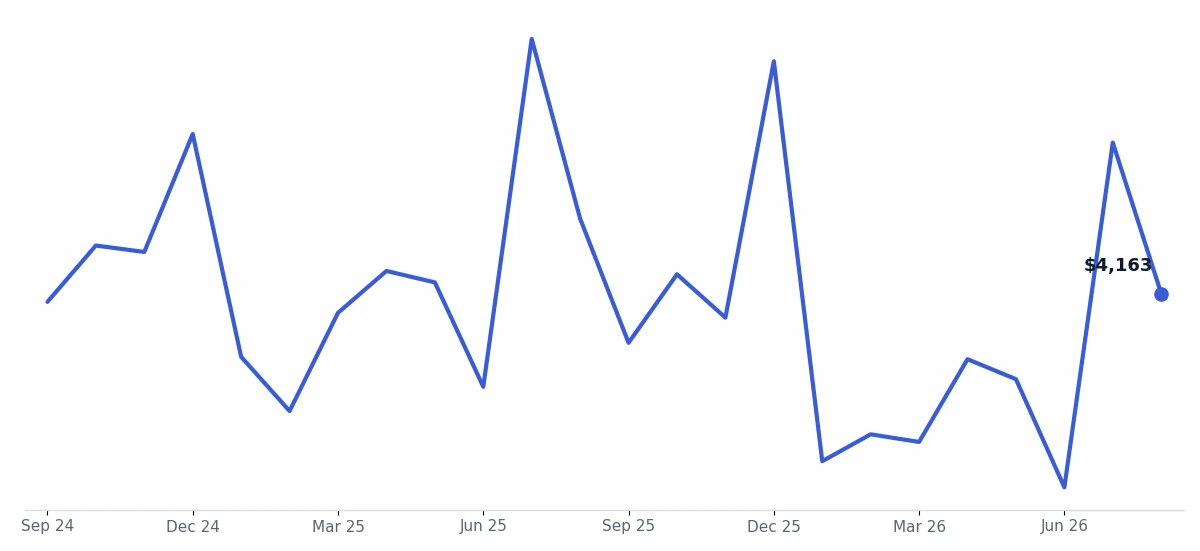
From the December 2025 peak of about $5,000, average owner revenue stepped down to about $3,500 in June 2026, then rebounded to roughly $4,700 in July. Four forces are at work:
- Seasonality. The big one, and it happens every year. December carries Christmas and the summer holidays; June is the softest month on the calendar. The step down is normal.
- Supply growth. More listings keep entering the market, so more properties share the same winter demand.
- Uncertainty. The council proposal and federal tax debate made owners and guests cautious through autumn. The May pause has taken heat out of that.
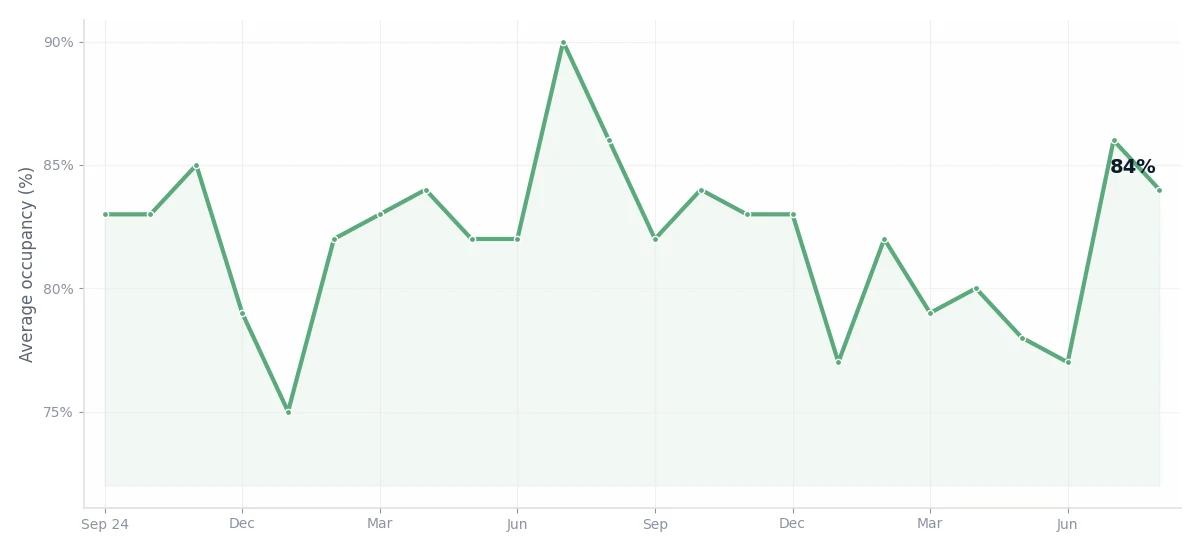
- Occupancy did the adjusting. The average nightly rate eased about 2% to $215 while occupancy slipped from 83% to 81%, leaving revenue per listing about 5.5% softer than the prior year. Larger properties held up best: 3 to 5 bedroom listings averaged $5,416 a month in owner revenue against $3,102 for one bedroom stock. Presentation and pricing decide which side of that line a property sits on.
05 · The Pricing Calendar
The Brisbane year, and the dates to review
Short-stay pricing in Brisbane should respond to confirmed events, holidays, booking pace and remaining availability. These are windows to review, not promised nightly-rate multipliers.
| Window | What is on | What smart pricing does |
|---|---|---|
| Dec to Jan | Christmas, New Year, summer school holidays, Gabba cricket | Review holiday lead times, minimum stays and confirmed Gabba fixtures. |
| Feb to Mar | AFL season opens at the Gabba, concert season resumes | Monitor weekend and weekday bookings as events resume. |
| Apr | Easter and autumn school holidays | Review family-stay demand and school-holiday gaps. |
| May | NRL Magic Round at Suncorp | Assess Magic Round booking pace; no sell-out or fixed premium is assumed. |
| Jun | The quiet trough; State of Origin when Brisbane hosts | Review quieter-season rates and any confirmed Origin fixture separately. |
| Jul | Winter school holidays | Assess winter-holiday bookings against actual lead times. |
| Aug | The Ekka at RNA Showgrounds | Check Ekka and Showgrounds dates against Bowen Hills booking pace. |
| Sep | Riverfire and Brisbane Festival, AFL finals at the Gabba | Review Riverfire, Brisbane Festival and AFL finals separately by property and date. |
| Oct to Nov | Spring events, concerts, early summer leisure | Monitor booking pace toward summer rather than assume steady rate growth. |
06 · Listing and Agreement Review
What to review in a listing and management agreement
Listing practices to assess
- Hotel standard presentation. Professional photography, proper linen and accurate styling. Show the layout and amenities guests need to assess.
- Dynamic pricing, every day. Rates that respond to events, booking pace and competitor movement, not a set and forget nightly figure.
- Fast, around the clock responses. Clear guest communication and around-the-clock issue response help guests resolve questions before and during a stay.
- Reviews defended like assets. Professional cleans and proactive guest communication support the stay experience and the review record.
- Smart minimum stays. Longer minimums may suit some peak windows, while short gaps need their own settings. The 3 night Brisbane average is context, not a target for every property.
The fee traps in management contracts
Cameron Tupper's professional market observations of publicly advertised Brisbane rates as at August 2026 put headline full-service commission rates from 18% to well above 30%. These are his observations, not third-party statistics, and the headline rarely tells the full story. Before signing anything, ask:
| The question | Why it matters |
|---|---|
| Is the percentage charged on gross or net bookings? | Charging on gross (before platform fees) quietly adds several effective percentage points. |
| Are there charges for linen, supplies or photography? | Some managers bill linen per stay, every stay, forever. It adds up to thousands a year. |
| Is maintenance marked up? | Cameron Tupper's professional market observation: some management arrangements add a 10 to 20% margin to tradesperson invoices. Ask for any markup to be disclosed in the written agreement. |
| What is the lock in and exit cost? | Twelve month lock ins with exit fees are how underperforming managers keep clients. |
| Who owns the listing and its reviews? | If the manager owns the listing, your hard earned reviews walk away with them if you leave. |
07 · Earnings Guide FAQs
Inner Brisbane Airbnb earnings FAQs
What the PriceLabs Hyper Local Pulse figures mean, what they cover and where their limits are.
What does owner revenue mean in this guide?
Owner revenue after booking platform fees, before management fees and owner costs. It is not net profit or a property-level forecast.
What period does the current earnings guide cover?
The analysis period is 1 September 2025 to 31 August 2026. The source is PriceLabs Hyper Local Pulse Brisbane market data, September 2026. This website edition was reviewed on 26 October 2026.
How many listings support the PriceLabs Hyper Local Pulse figures?
The wider PriceLabs Hyper Local Pulse Brisbane dataset contains 4,310 active listings and supports the 81% occupancy, $215 average daily rate and 3-night average stay. The twelve-suburb PriceLabs Hyper Local Pulse comparison contains 2,950 active listings and supports the suburb revenue figures and the $4,130 inner-Brisbane average.
How is the $4,130 inner-Brisbane average calculated?
The published $4,130 figure is the listing-weighted average from the original PriceLabs Hyper Local Pulse analysis of the twelve-suburb comparison. It is not recalculated from the rounded display rows in the downloadable CSV.
Do these averages predict what my property will earn?
No. PriceLabs Hyper Local Pulse suburb averages combine different property types, sizes, presentation and availability. They provide market context, not a property-level forecast. Obtain a current rental appraisal and a property-specific estimate for your address.
Verified Bowen Hills case study
See what changed at a Bowen Hills apartment
A flat nightly rate and frequent one-night stays became a property-specific strategy with a three-night minimum, professional presentation and broader distribution. The verified six-month comparison recorded 89% occupancy, approximately $29,100 gross revenue and less than 15 minutes of owner involvement per month. Results are property-specific.
Source: Bowen Hills case study, verified against platform and financial records.
08 · Your Numbers
A worked example, and how to get yours
What the average listing earns
| Line item | Amount |
|---|---|
| Owner revenue (inner Brisbane average, trailing 12 months) | $4,130 |
| Inner Brisbane average after the 18% + GST management fee | about $3,312 |
| Two bedroom short stay average after the 18% + GST management fee | about $3,187 |
| Typical long term lease, comparable two bedroom apartment | $3,000 to $3,400 |
| Long term lease netted at the $3,200 midpoint: 8.8% management, $10 monthly statement fee, one letting fee (a week's rent + GST) and $300 to $400 advertising averaged over annual turnover | about $2,812 |
Owner costs like utilities, internet, strata or rates come out of the short stay figure, and landlord costs come out of the lease. After fees on both sides and before those costs, the two bedroom average runs about 13% ahead of the netted midpoint rent, a gap of about $375 per month before short-stay owner costs. Seasonal results can differ from the annual average. Renewals cost less than a new let (50% of a week's rent and no advertising), which narrows the gap in a renewal year. Cleaning is paid by guests, not by you.
What you get for 18% + GST
- Daily dynamic pricing across Airbnb and major booking channels
- Professional photography, listing copy and ongoing optimisation
- All guest communication, vetting and 24/7 issue response
- Hotel standard cleans coordinated between every stay
- Maintenance coordination with local trades, with approvals and charges governed by the written agreement
- 24/7 owner portal: forward bookings, block your own dates, download statements
- No lock in contracts. If we stop performing, you can walk away.
Get a free income estimate for your property
We will review your property against relevant PriceLabs Hyper Local Pulse market data and provide a short-stay versus long-term income estimate. It will be a property assessment, not a guaranteed result.
Get My Free Estimate Call Cameron Tupper: 0404 292 533Brisbane Airbnb Management is powered by Oasis Stay, with 20+ years of property management experience behind it. This guide is general information only, not financial, legal or taxation advice. Market figures are drawn from PriceLabs Hyper Local Pulse data for the 12 months to August 2026. The wider dataset has 4,310 active listings and the twelve-suburb comparison has 2,950. Figures are shown as owner revenue after booking platform fees, before management fees and owner costs, and are averages, not a projection or guarantee for any individual property. The worked example uses the inner Brisbane average for illustration; actual results depend on the property, presentation, location, pricing and market conditions. Regulatory information is summarised from public announcements as at October 2026 and may change. Figures exclude GST unless stated. Updated October 2026, Brisbane, Queensland.